Step 0 — the candidacy checklist (do not skip this)
Treatment on the wrong roof is wasted money. Walk the roof (or hire an inspection) and check honestly:
Good candidates
- Asphalt shingles, dry and intact (this guide is asphalt-only — not tile, metal, cedar or flat roofs)
- Granules mostly still on — some in the gutters is normal
- No active leaks; flashing and vents sound
- Shingles stiffening or looking dull, but lying flat
Repair first — or don't treat
- Active leaks or water stains inside
- Missing, torn, curled or cracked shingles
- Bald patches with exposed fibreglass mat
- Soft or spongy decking underfoot
Safety — read before the ladder comes out
- Fall protection, always: harness, anchored rope, proper footwear. Roof work injures more homeowners than any product saves.
- Never work alone, and never on a wet, icy or windy day (makers suggest wind under ~15 mph).
- Treated shingles are slippery while the emulsion is fresh. Plan your route so you finish at the ladder, and stay off the roof for about 48 hours afterwards.
- Foam pads under knees and feet spread your weight and stop your boots scuffing granules loose — the pros' trick, and the reason our accessory basket includes them.
- Low pressure only. Never use a pressure washer to apply or to prep — it blasts granules off and can drive water under the shingles.
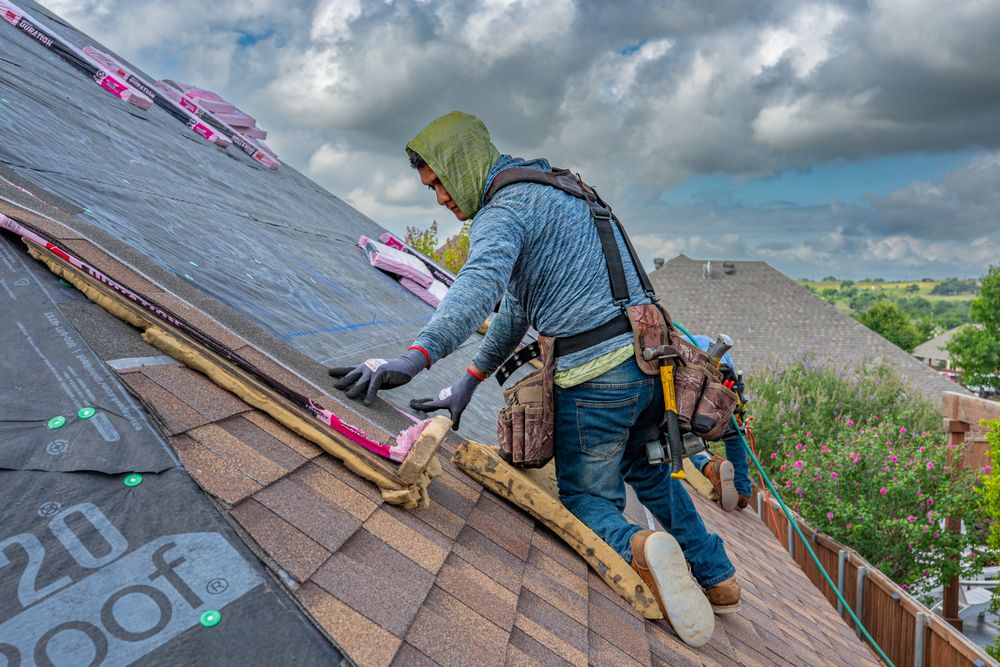
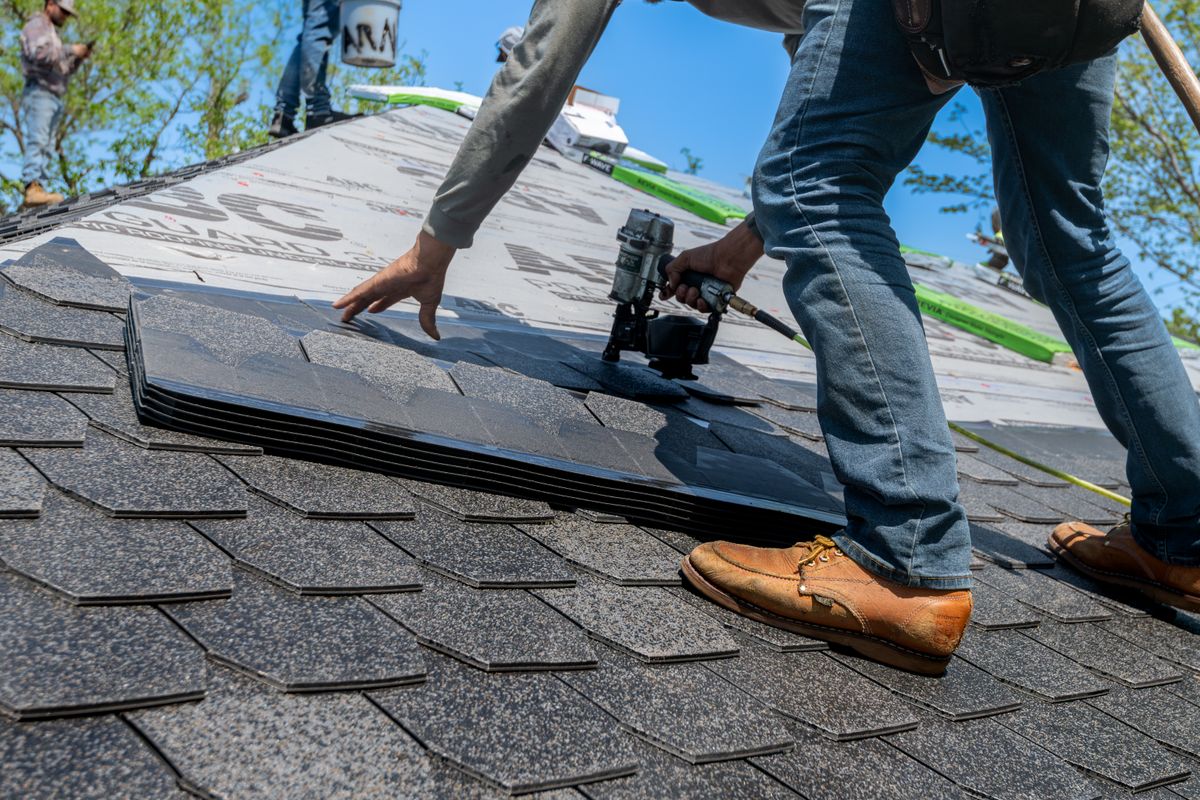
Prep, before the photos above ever happen: blow or gently wash off debris and loose grit, and let the roof dry completely. Heavy moss comes off as its own job, first — a conditioner is not a moss killer, and high pressure is never the tool.
The job, step by step
- Inspect and repair. Replace damaged shingles, reseal flashing, fix what leaks. Conditioner goes on a sound roof, not over problems.
- Clean. Blow or gently wash off debris, leaves and loose grit. Moss colonies need a proper soft-wash cleaning and time to die off before treatment — a conditioner is not a moss killer.
- Let it dry completely. A dry shingle drinks the emulsion in; a wet one shrugs it off.
- Pick the weather window. Dry roof, calm air, and no heavy rain in the forecast for at least 24–72 hours (each maker's guide sets its own numbers — HydraSoy allows light rain after ~1 hour of absorption; SoyFuze asks for 24 dry hours).
- Mix to the label. Ratios differ by product: HydraSoy is 1 part concentrate to 4 parts water; APEX-1132 makes 6 gallons from 1; SoyFuze makes 4 from 1. The label on your jug outranks any guide, including this one.
- Spray low and even. Overlapping passes to a uniformly damp look — no puddling, no heavy runoff, don't spray straight into gutters. Work in sections and mind your exit route.
- Let it absorb. Makers put absorption at roughly 30–60 minutes, with results developing over ~72 hours.
- Write it down. Date, product, gallons used, weather. That record is what makes the next treatment — five years on — a plan instead of a guess. The program page will even remind you.
How much do I need? Measure the roof's shingle surface (footprint × a pitch factor, or count squares: 1 square = 100 sq ft). A typical 2,000 sq ft roof takes 2 gallons of APEX-1132, 1–2 of HydraSoy, or one SoyFuze 4-Pack. Full math on the cost guide.